Wednesday, 27 June 2012

Connect2 Tender


First draft of illustrated strapline for Sustrans Connect2 interpretation board template, unfinished.

Part of a national project extending and linking public access networks to local communities. The aim, to engage and encourage public use beyond recreation.  

Design Rationale

The illustration is a cohesive montage depicting a variety of landscape types in the background and network user types in the foreground. The variety of users to include school pupils on their way to school, manual and blue collar workers on their way to work and shoppers on their way home. Although aesthetically pleasing, the illustrated Strap line is a deliberate vehicle to indicate the potential use of each network and is further reinforced by the placement of the Connect2 tag line “Everyday journeys by foot or bike”.

The landscapes represent rural, urban and city communities and also indicate each nation e.g. Mountain ranges for Scotland, sweeping valleys for Wales, rugged coastline for Northern Ireland and open countryside featuring oak trees for England. Each topographic feature follows Sustrans specific colour swatch i.e. Pink/Northern Ireland, Dark blue/Scotland, Rust/Wales. Additional palette includes Sustrans logo bright green and grey, Route Sign blue and England Safe Routes to Schools bright blue.

Peppered throughout the landscapes, will be iconic architectural features including bridges, village church spires, perhaps mosques and city skyscrapers. Additional transport infrastructure such as trains, buses and a canal and towpath (as an historic reference to Sustrans) will also be incorporated.   

Style

Contemporary vector illustration, inspired by flat poster engravings from the 1930s to 50s, illustrated by the likes of Brian Cook and Harold Briercliffe’s, Britain by Bike book covers.
     

Tuesday, 12 June 2012

Brown Hawker


Welches Meadow LNR
Radford Road, Leamington Spa
OS Grid Ref: SP 325 657


Brown Hawker – Aeshna grandis


A preview from an interpretation board to be installed on the reserve a little later this year.

The Brown Hawker flies between June and September. It hunts away from the water usually along woodland rides, so you should also explore the adjacent Leam Valley reserve on the other side of the river. Well worth tracking down, it’s flight is faster than any other and it flies backwards too.

Tuesday, 5 June 2012

Where it all started

It was Alfred Bestall's illustration of Nutwood, the fictitious English village where Rupert Bear lived. First introduced to me through my big sister's hand-me-down annuals from the late 1950's.

1956. A.E. Bestall
1962 A.E. Bestall

Rupert Bear was originally created and illustrated in 1920 as a strip in the Daily Express Newspaper by Mary Tourtel, who retired in 1948.

Throughout the late 1960's to the mid 70's, I got my own Annuals every Christmas. It was always the portrayal of the British countryside that I adored and couldn't wait to see. Note the red not grey squirrels...

1969 A.E. Bestall
The stories were absolute fantasy yet because of the realism in the landscape detail, I believed everything was true.    

Tuesday, 10 January 2012

Brandon Marsh SSSI Map

Brandon Marsh Reserve Map
Brandon Lane, Coventry
OS Grid Ref: SP 386761
January 2012

January 2012

January 2002

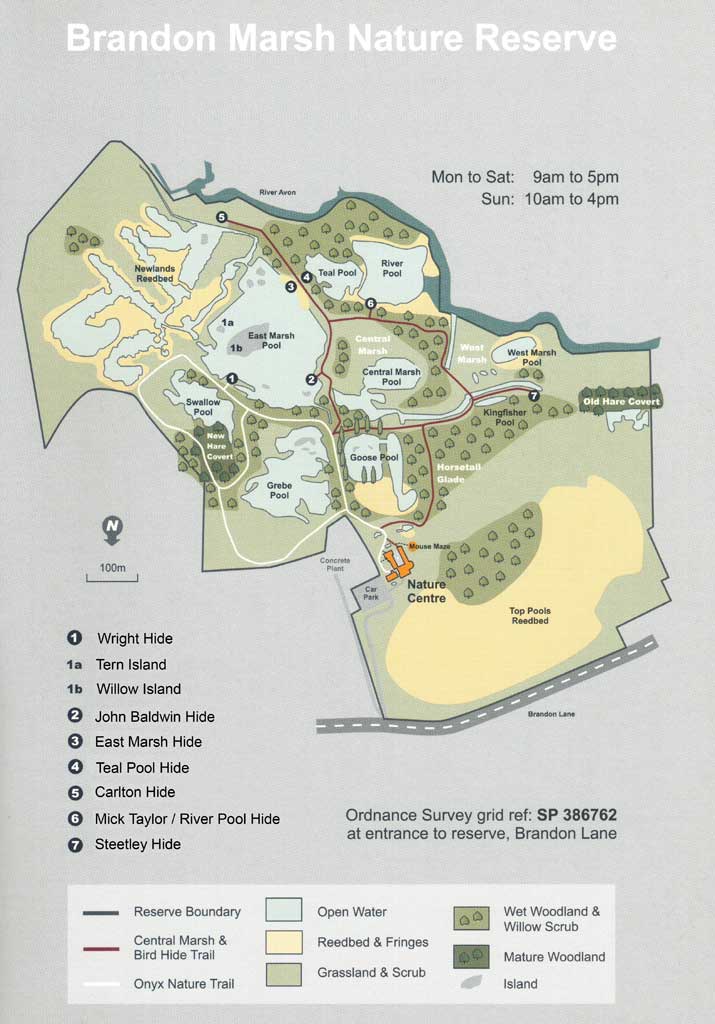
It's a rare treat to update work I originally produced a decade ago, by redesigning the Brandon Marsh Nature Reserve leaflet for Warwickshire Wildlife Trust.

The project was such a pleasure to do, especially working with esteemed members of The Brandon Marsh Voluntary Conservation Team who, guided me through the development of the reserve over the past ten years. The detail of which can be seen on the maps above, click on the image to enlarge and explore. The map is printed on an A3 sized centre spread in the leaflet to help new visitors navigate the reserve.

Many thanks to other BMVCT members who kindly allowed me to select and use their fabulous wildlife photography featuring throughout the leaflet.

For an extensive insight into Brandon Marsh and a prolific photographic gallery, visit The Unofficial Guide to Brandon Marsh 


Tuesday, 18 January 2011

Lias Line NCN Route 41


National Cycle Network Route 41
Lias Line, Draycote
OS Grid ref: SP 443700
January 2011


Warwickshire Butterfly Conservation have initiated the Small Blue Butterfly Project, targeting one of the last remaining populations of the Red Listed Small Blue, at Southam Quarry.

With its proximity to this part of the Lias Line greenway on Route 41, both organisations are working in partnership to enhance the habitat and hopefully extend the range of the UK smallest butterfly. Such specific management will not only encourage other threatened butterfly species such as Grizzled and Dingy skippers, but also a wider variety of wildlife to the area.

Working with Sustrans Ecologist, Hannah Roberts and Mike Slater from Warwickshire Butterfly Conservation, we are designing a series of interpretation boards along the route.

To find out more about The Small Blue Butterfly Project and Sustrans National Cycle Network follow these links:


http://www.warwickshire-butterflies.org.uk/small-blue.asp

http://www.sustrans.org.uk/what-we-do/national-cycle-network/biodiversity-conservation


Whitacre Heath SSSI

Whitacre Heath SSSI
Between Coleshill and Tamworth
OS Grid ref: SP 209931
December 2010


Extensive wetland nature reserve situated in the flood plain of the River Tame. Designated a Site of Special Scientific Interest for its importance to breeding birds.


Working with Tim Haselden, Warwickshire Wildlife Trust Wetland Living Landscape Officer, we are creating bird identification panels that will be displayed in the five reserve hides. Tim, a former employee at Solihull Metropolitan Borough Council, worked on the in-house design of the Lavender Hall Park interpretation board series - see previous post.


The panels at Whitacre Heath, will show a number of bird species most likely to be seen from a variety of habitats on the reserve, including; open water, woodland, reed and marsh.

Wednesday, 25 November 2009

Lavender Hall Park


Lavender Hall Park
Balsall Common, Solihull.
OS Grid ref: SP2378 7783
October 2009

As projects go, this was relatively straight forward but required an urgent turn around.
The text was supplied and the design and layout style were already firmly established and displayed throughout the site by a series of boards detailing various habitats. This afforded me valuable time to concentrate solely on the vector illustration and meet the challenging deadline.
A series of two interpretation boards were commissioned by Warwickshire Wildlife Trust in September 2009, to provide the visitor with on-site identification guides. The first features sixteen birds most likely to be seen visiting the parks feeding station. The second illustrates eleven leaves from the native tree species featured in the park.

Lavender Hall Park local nature reserve became a public open space in 2000 and is owned and managed by Solihull Metropolitan Borough Council. It's 11.23 hectares features open grassland, ponds, hedgerows with mature oaks, recent broad leaved plantations, playground, skate park and football pitches.
Both boards have gone to press and are being manufactured by Shelley Signs Ltd. They are due to be installed very shortly.

Illustration style

A majority of my illustration has been developed specifically for a niche market. My principal for delivering natural history theories and detail to the general public, is a combination of scientific and gesture illustration.

What on earth does this mean?

Lets take wildlife illustration, in order to identify a particular species, we need the fine detail or specification such as the venation of an insect wing, the exact segmentation of the tarsus of an ants leg, the variation in scale size in fishes or the topography of a birds wing. This detail maybe overlooked by many viewers but I regard the general public as having a variety of levels of knowledge and I want to accommodate all.

Gesture, this element of illustration I feel is key to grabbing the attention of less informed viewers and makes way for an aesthetic consideration. It is the difference between drawing from a specimen and drawing from life. It deals with movement and behavior which is superimposed over anatomy.

Line art

Monochromic and precise, hand drawn as a hardcopy i.e. Pen and ink on paper or scratch board. Line art has a long history and firmly established tradition and is mostly associated with applied scientific illustration e.g. used in academic text books. A speciality in itself and one I greatly admire. See illustrators such as Wendy B. Zomlefer and K. Hansen McInnes.

In my formative years as a graphic illustrator, I used pen and ink exclusively. My particular technique involved Rotring Isograph technical drawing pens on tracing paper. This practice served me well when I spent a year working in the lab at UEL, drawing microscopic invertebrates, mammals teeth and the digestive system of a pigeon. I loved it but unfortunately these days, I rarely get the opportunity to draw from specimens.


Between 2000 and 2006 I worked on a series of nature reserve interpretation boards for Warwickshire Wildlife Trust, that still feature throughout the county today. The graphics show pen and ink drawings of a variety of wildlife species, rendered in stippling, eyelashing and crosshatching to highlight texture, volume and transparency.

This is a drawing style I will always enjoy but get ask for less frequently.

Vector

Full colour, control and portability. Vector illustration is geometric and digital, computer generated images created through applications such as Quark Express, Adobe Illustrator and the original pioneer, Corel Draw.

I decided some five years ago to broaden my technique and develop my skills, prompted by the realization that the 21st century viewer was becoming more sophisticated, as the popularity of the internet and digital graphics grew exponentially. I also felt that younger generations of viewers would relate to vector illustration more readily than any other style or format.

Ironically however, there is a habit I can not break - every piece of my artwork initially starts out as a pencil sketch on paper!


Monday, 23 November 2009

Learn and Discover


Learn & Discover
Warwickshire Wildlife Trust
Brandon Marsh Nature Centre

September 2009


The education team at Warwickshire Wildlife Trust approached me early in July, wanting a total re-brand of their department to coincide with the launch of their new name - Learn & Discover.

The entire project included a logo, a ‘global family’ of characters who, along with a strong branding image, could easily be adopted throughout all promotional material produced both in-house by the Trust and commercially.

The starting point of the project arose out of the former Education and WildPlay teams party service, which required a leaflet detailing the activities and services on offer and also a set of invitations which are supplied with firm bookings.

The result is a brand image based on the Really Wild Parties poster above. Although there is some full colour illustration featured within the material (such as the ant), it is the solid fill wildlife species in three colours; cyan, orange and the all trendy electric green, and the magenta title text that strongly associate the brand. These colours predominate in any Learn & Discover graphic, it runs through the logo and the global family characters. The fonts are also specific.

Academic Year Planner


Education Wall Planner
Warwickshire Wildlife Trust

August 2009

This is an A2 sized academic year calendar which the Trust produces each year for use in local schools. The calendar grid, it’s detail and illustration are original and change annually. The layout; strap line, logo and lead spot colour follows the national Wildlife Trusts corporate identity guidelines.

The illustrated scene shows a variety of wildlife and habitat. On a personal note, I wanted to feature the 7- spot ladybird in particular, which takes centre stage. This was because this time last year, I noticed in my garden, a large number of ladybirds I didn’t recognize and a distinct lack of those I did!

I sent photographs and records off to The UK Ladybird Survey, who indeed identified the alien species as Harmonia axyridis or Harlequin ladybird, the most invasive ladybird on Earth.

The predatory Harlequin feeds on our native species and has steadily populated Britain from the southwest since 2004.

Fortunately, this year my lovely aphid-eating friends have returned to the garden but annual maps from the survey show an astounding trend.
http://www.ladybird-survey.org/